


 Play Audiobook Sample
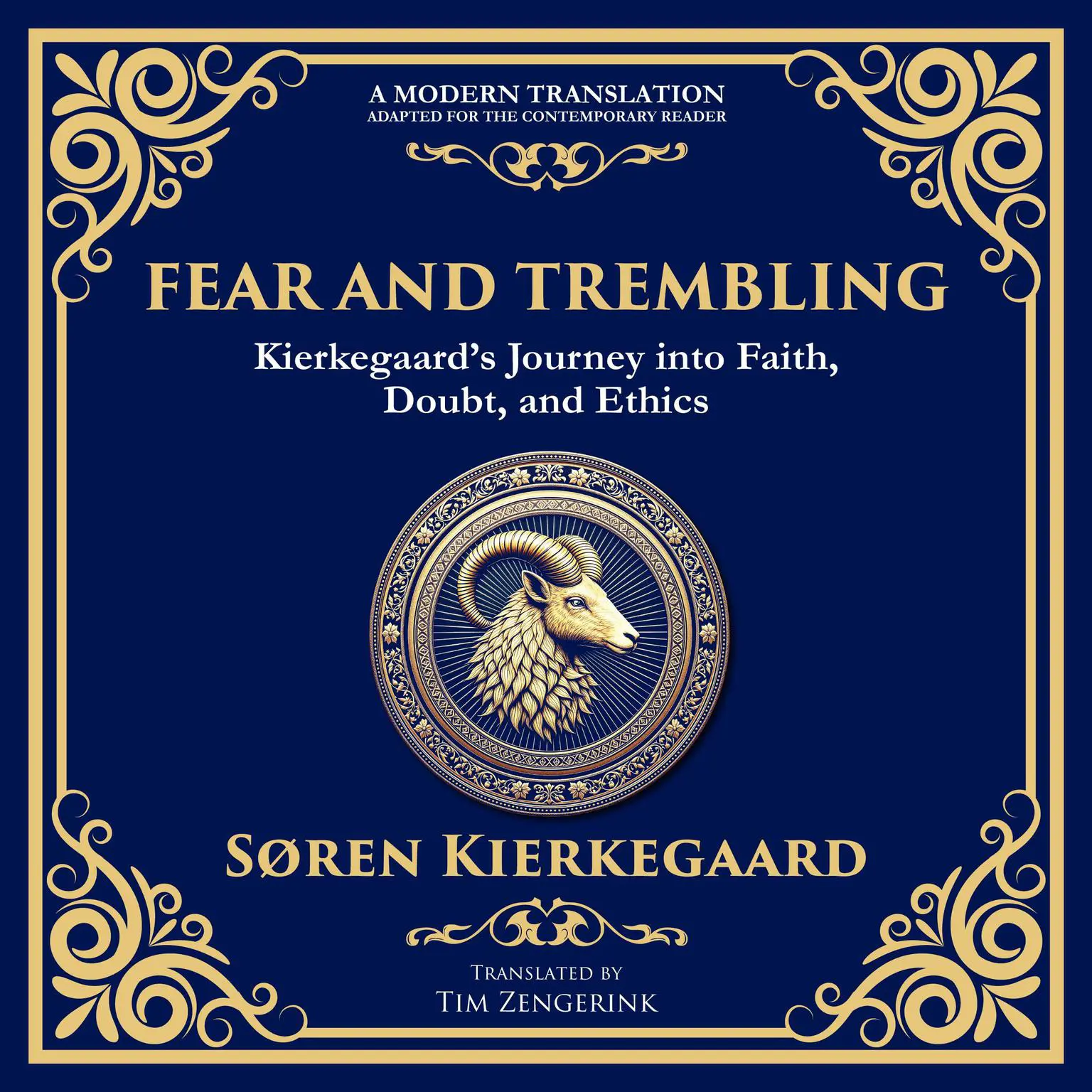
Fear and Trembling: Kierkegaard’s Journey into Faith, Doubt, and Ethics - A Modern Translation - Adapted for the Contemporary Reader Audiobook
Play Audiobook Sample
 (0.00) - 0 listener ratings
Quick Stats About this Audiobook
Total Audiobook Chapters:
Longest Chapter Length:
Shortest Chapter Length:
Average Chapter Length:
Audiobooks by this Author:







Publisher Description
What if you could explore the profound relationship between faith, doubt, and the search for meaning in life?
Fear and Trembling: Kierkegaard’s Journey into Faith, Doubt, and Ethics brings you Søren Kierkegaard’s groundbreaking exploration of faith and morality, thoughtfully adapted for today’s listeners.
Written in the 19th century, Fear and Trembling delves into the “leap of faith”—an act of trust and surrender beyond reason. Through the story of Abraham and Isaac, Kierkegaard examines the tension between personal faith, ethical obligations, and the complexity of the human condition. His reflections challenge readers to question belief, doubt, and sacrifice.
This isn’t just a philosophical work—it’s a transformative guide to grappling with the struggles of faith, ethical dilemmas, and the courage to face life’s uncertainties. Whether you seek spiritual wisdom, study philosophy, or explore deeper questions of existence, Kierkegaard’s timeless insights will inspire and challenge you.
What You’ll Discover:
- The Nature of Faith and Sacrifice: Understand faith as a personal, transcendent experience beyond logic.
Ethics and Moral Dilemmas: Reflect on the tension between religious obedience, personal responsibility, and societal norms.
- The Leap of Faith: Discover what it means to take a leap of trust in moments of fear and doubt.
- Modernized for Today’s Listeners: Experience Kierkegaard’s profound insights in clear, accessible language tailored for modern understanding.
Kierkegaard’s Fear and Trembling remains a cornerstone of existential philosophy, offering timeless reflections on faith, ethics, and human nature. His ideas challenge us to confront uncertainty with courage, embrace responsibility, and deepen our understanding of what it means to believe.
Download your copy today and explore the transformative power of Søren Kierkegaard’s Fear and Trembling.
Download and start listening now!
Fear and Trembling Listener Reviews
Be the first to write a review about this audiobook!
About the Authors
Julius Caesar (100 BC–44 BC) was a military general and leading politician in the Roman republic. His family, the Julii, claimed descent from the ancient kings of Rome and from the goddess Venus. Caesar rapidly carved out an impressive political career, forging an alliance with Pompey and Crassus in 60 BC. The Civil War is Caesar’s attempt at an explanation of the war that changed the Roman world.
Friedrich Nietzsche (1844–1900) was a nineteenth-century German-born philosopher and classical philologist. He wrote critical texts on religion, morality, contemporary culture, philosophy, and science, using a distinctive German language style. In 1889 he exhibited symptoms of insanity and lived his remaining years in the care of his mother and sister. His ideas exercised a major influence on several prominent European philosophers, including Martin Heidegger, Albert Camus, and Jean-Paul Sartre.