


 Play Audiobook Sample
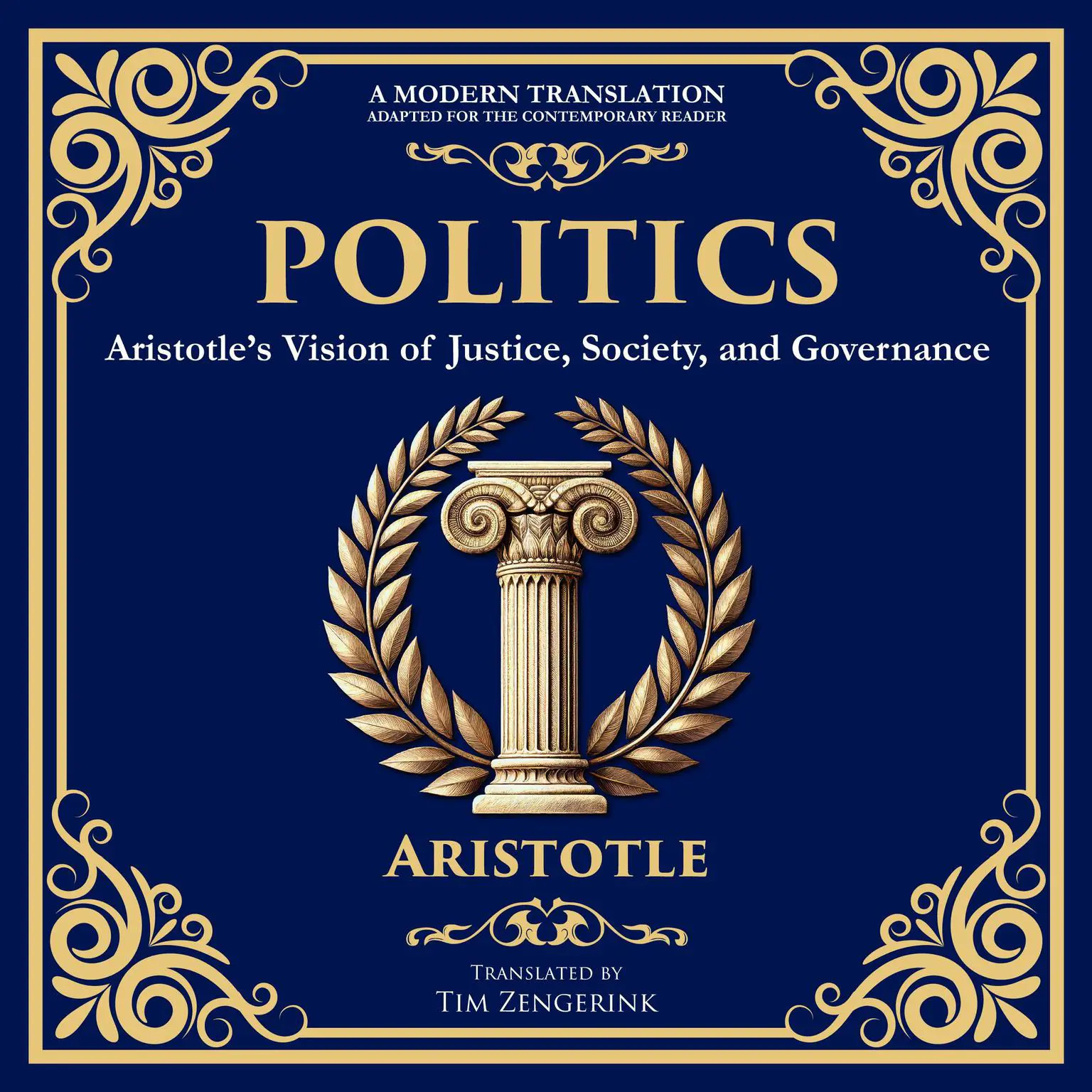
Politics: Aristotle’s Vision of Justice, Society, and Governance - A Modern Translation - Adapted for the Contemporary Reader Audiobook
Play Audiobook Sample
 (0.00) - 0 listener ratings
Quick Stats About this Audiobook
Total Audiobook Chapters:
Longest Chapter Length:
Shortest Chapter Length:
Average Chapter Length:
Audiobooks by this Author:



Publisher Description
What if you could understand the foundations of justice, build a fair society, and unlock the principles of effective governance?
Politics: Aristotle’s Vision of Justice, Society, and Governance presents Aristotle’s timeless exploration of political theory, now thoughtfully adapted for today’s listeners.
Written over two thousand years ago, Politics remains one of the most influential works on governance, justice, and societal structure. Aristotle examines systems of government, the role of citizens, and the principles that create thriving societies. His insights offer a blueprint for understanding communities, ethical leadership, and the balance between freedom and responsibility.
This isn’t just an academic text—it’s a practical guide for understanding leadership, justice, and society in a way that resonates with modern challenges. Whether you’re a student, a leader, or someone striving to understand societal complexities, Aristotle’s teachings will inspire critical thinking and wise action.
What You’ll Discover:
- The Nature of Justice and Equality: Learn Aristotle’s principles of fairness and their importance in stable communities.
- Forms of Government: Explore systems like monarchy, aristocracy, and democracy, and their strengths and weaknesses.
- The Role of Leadership: Discover how ethical leaders shape societies with wisdom, integrity, and focus on the common good.
- Modernized for Today’s Listeners: Experience Aristotle’s insights in accessible, contemporary language for today’s world.
- Aristotle’s Politics provides an enduring framework for understanding governance, societal harmony, and justice. His vision challenges us to consider how power fosters fairness, prosperity, and ethical leadership.
Download your copy today and explore Aristotle’s timeless vision of governance and the common good.
Download and start listening now!
Politics Listener Reviews
Be the first to write a review about this audiobook!
About the Authors
Aristotle (384–322 BC) was a Greek philosopher, scientist, and physician. As a young man, he became a student under Plato in Athens. In 342, he became the tutor of young Alexander the Great in Macedonia. After that, Aristotle returned to Athens to establish his own school and research institute, the Lyceum. His writings have profoundly affected the whole course of philosophy, from ancient times to the present.
Julius Caesar (100 BC–44 BC) was a military general and leading politician in the Roman republic. His family, the Julii, claimed descent from the ancient kings of Rome and from the goddess Venus. Caesar rapidly carved out an impressive political career, forging an alliance with Pompey and Crassus in 60 BC. The Civil War is Caesar’s attempt at an explanation of the war that changed the Roman world.