


 Play Audiobook Sample
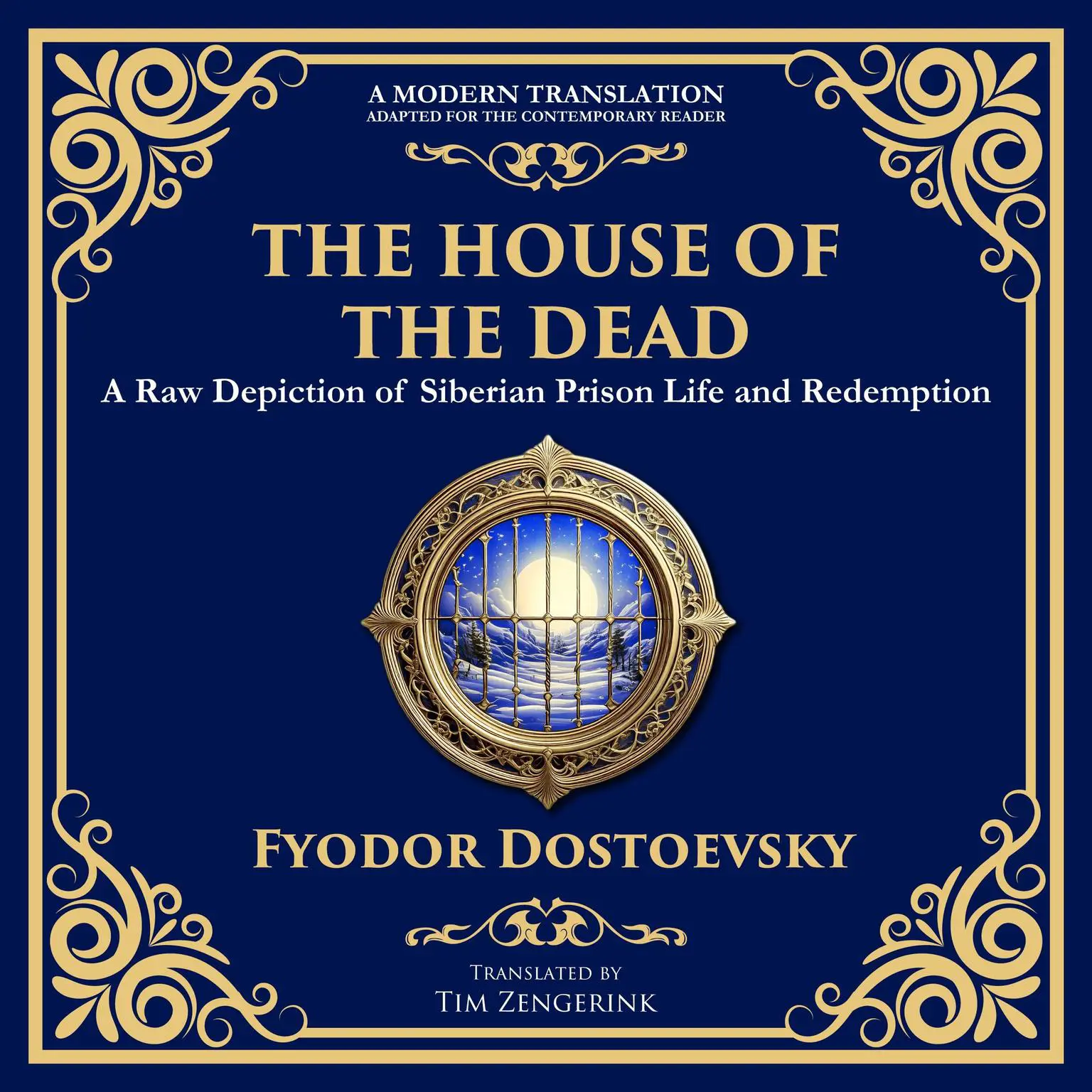
The House of the Dead: A Harrowing Journey Through Suffering, Redemption, and the Human Soul Audiobook
Play Audiobook Sample


 (3.00) - 4,406 listener ratings
Quick Stats About this Audiobook
Total Audiobook Chapters:
Longest Chapter Length:
Shortest Chapter Length:
Average Chapter Length:
Audiobooks by this Author:







Publisher Description
What if the lowest point in life revealed your highest truths?
The House of the Dead is Fyodor Dostoevsky’s gripping account of life in a Siberian penal colony, based on his own years of imprisonment.
Through the eyes of a former nobleman turned convict, this deeply personal work unveils a world of brutality, endurance, and unexpected moments of grace.
What you’ll discover inside:
- A Firsthand Look at Life in a Tsarist Labor Camp – Vivid details of punishment, survival, and daily hardship.
- The Psychology of Prisoners and Guards – A powerful exploration of identity, power, and humanity in confinement.
-Moments of Redemption and Humanity – Even in prison, kindness and courage survive.
- A Candid Meditation on Crime, Suffering, and Spiritual Growth – Witness the inner transformation of a man stripped of everything.
Both harrowing and redemptive, this modern translation makes Dostoevsky’s raw insights as immediate and stirring today as they were in the 19th century.
Start listening now and step inside one of the most soul-stirring prison memoirs ever written.
Download and start listening now!
"Alongside with "Notes from Underground", "Demons" and " The Brothers Karamazov" I consider "The House of the Dead" to be one of the most outstanding novels written by Dostoevsky as well as the most authentic one. While Shalamov shows the monstrous side of exile and Solzhenitsyn sees benefits of it, Dostoevsky (still much earlier and in some other conditions) hightlights both aspects. The delicate skill of the author to observe and analyze hardly can fail to impress."
— Ksenia (5 out of 5 stars)
The House of the Dead Listener Reviews
-
" Ah, my aRussian period "
— doug, 2/16/2014 -
" Please mentally add a half star to my rating. Skipped Poor Folks because I couldn't find it and began my travail of reading all of FD's novels with this one. As can be imagined, it had similarities with Ivan Denysovic (but covered 10 years instead of one day) and Kolyma Tales (although FD seemed to actually enjoy the stay). The fictionalized version of FD's term in a Siberian prison, he covered the many hardships endured and provided wonderful characterizations of the varied convicts he served with. As is usual with FD, he finds a glimmer of hope within the dregs of mankind and he then goes on to make an impassioned case against capital punishment. "
— Eric, 2/10/2014 -
" A semi-fictional account of Dostoevsky's four-year term in a Siberian prison camp. 'Twas written before he reached his creative peak, but in this book you can feel him ready to break out and unleash his genius upon the world. "
— Jared, 2/5/2014 -
" A great portrait of the gulag, as seen by Dostoyevsky when he was sent to Siberia. "
— Jason, 1/31/2014 -
" The only Dostoevsky that I pretty much actively disliked. "
— Sophie, 1/17/2014 -
" Poor bastard. "
— MJ, 12/26/2013 -
" A haunting book. "
— Alex, 12/2/2013 -
" This was my introduction to the world of Dostoevsky. A brutal depiction of prison life in Siberia, based on his own experience. If you're an appreciator of Dostoevsky's works, I highly recommend reading this one. "
— Alex, 11/24/2013 -
" omg there's a typo on page 3! "
— Cheri, 10/29/2013 -
" This book was not ruined for me by recently attending the Janacek opera version at the Met. Seems to be a lot more about class than love compared to the opera. "
— Charlise, 10/17/2013 -
" Similar to One Day in the Life of Ivan Denisovich (which I quite liked), but much harsher, for a much longer period of time, and plenty more heart-wrenchingly tragic and amusing moments. Dostoevsky portrays the awful reality of the Serbian prison camps. "
— Emily, 7/14/2012 -
" I love Dostoevskii. "
— Jonathan, 2/10/2012 -
" Reading Dostoyevsky is a journey and an education. His works stay with you long after the last page is turned. "
— MountainShelby, 12/30/2011 -
" Actually I didn't 'finish' this book... I had to set it aside for another time. We'll see if when I pick it up again I can enjoy it more. "
— Trevor, 9/25/2010 -
" Offers deep insight into Dostoevsky's life and work, Czarist Russia and the future Gulag. Read before reading Solzhenitsyn. "
— Owen, 6/24/2010 -
" A profound read. Full of pathos and heartbreaking testimonies of life in a Siberian prison. The author wrote some of the wisdom he had discovered in his imprisonment and it is quite touching, eye-opening. "
— Shari, 4/10/2010 -
" Tedious. No plot. The characters where very real in some ways but it read like a psychological analysis. Completely lacking emotion from the narrator. My first Dostoyevsky and now I'm thinking I probably should have started with Crime and Punishment. "
— Melissa, 5/13/2009 -
" Excellent! There's not really any overarching story, but I found the individual stories and character studies to be very engaging. "
— Joey, 2/4/2009 -
" My favorite book by Dostoevsky so far about being in a hellish prison in Siberia. Very dark and nightmarish, especially because it is non-fiction. "
— Caligula, 7/28/2008
About the Authors
Fyodor Mikhailovich Dostoevsky (1821–1881) was a Russian novelist, journalist, and short-story writer whose psychological penetration into the darkest recesses of the human heart had a profound and universal influence on the twentieth-century novel. He was born in Moscow, the son of a surgeon. Leaving the study of engineering for literature, he published Poor Folk in 1846. As a member of revolutionary circles in St. Petersburg, he was condemned to death in 1849. A last-minute reprieve sent him to Siberia for hard labor. Returning to St. Petersburg in 1859, he worked as a journalist and completed his masterpiece, Crime and Punishment, as well as other works, including The Idiot and The Brothers Karamazov.
Julius Caesar (100 BC–44 BC) was a military general and leading politician in the Roman republic. His family, the Julii, claimed descent from the ancient kings of Rome and from the goddess Venus. Caesar rapidly carved out an impressive political career, forging an alliance with Pompey and Crassus in 60 BC. The Civil War is Caesar’s attempt at an explanation of the war that changed the Roman world.
About Zeek Ring
James Allen (1864–1912) was a philosophical writer born in Leicester, England. He wrote numerous spiritual and inspirational books, including From Passion to Peace and The Eight Pillars of Prosperity. He is considered a pioneer of the self-help movement. His best-known work, As a Man Thinketh, has been in print since its publication in 1902.