


 Play Audiobook Sample
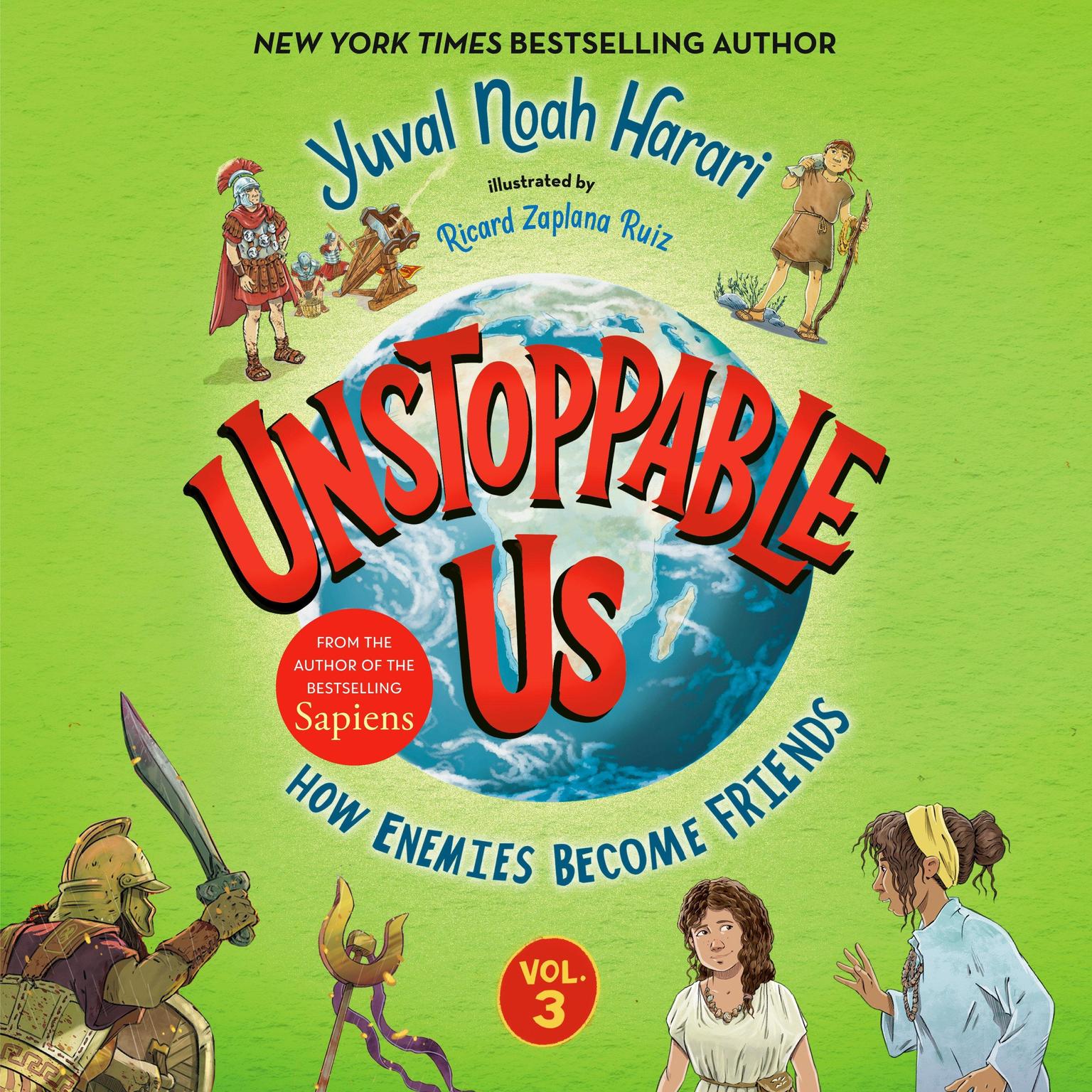
Unstoppable Us, Volume 3: How Enemies Become Friends Audiobook
Play Audiobook Sample
 (0.00) - 0 listener ratings
Quick Stats About this Audiobook
Total Audiobook Chapters:
Longest Chapter Length:
Shortest Chapter Length:
Average Chapter Length:
Audiobooks by this Author:


Publisher Description
In the third book in the New York Times bestselling series from Yuval Noah Harari, explore how different ancient civilizations united and created countries and cultures we have today!
How do you become friends with your enemies?
The answer to that is one of the strangest tales you’ll ever hear. And it’s a true story!
Books, movies, and video games are full of stories about wars, battles, and empires, but where did all these conflicts come from? More than 2,000 years ago, humans collaborated, exchanged stories, and married those from different lands. New cities and cultures were formed, and languages and religions were shared. But sometimes our differences become bigger than the things that unite us, turning us from neighbors to enemies.
From exchanging food and traveling across oceans to building empires and developing religions, prepare to explore how early civilizations interacted with each other and shaped the way we are today.
In Unstoppable Us, Volume 1 and 2, acclaimed author Yuval Noah Harari explored the early history of humankind and how human society flourished. In Volume 3, he is back with a captivating story of how cities formed and grew. His dynamic writing brings this amazing story of our past to life.
Download and start listening now!
Unstoppable Us, Volume 3: How Enemies Become Friends Listener Reviews
Be the first to write a review about this audiobook!
About Yuval Noah Harari
Yuval Noah Harari is a historian, philosopher, and the award-winning author of several New York Times bestselling books, including Sapiens: A Brief History of Humankind. He is considered one of the world’s most influential public intellectuals working today. He was born in Israel, received his PhD from the University of Oxford, and is a lecturer in the Hebrew University of Jerusalem’s department of history. He co-founded the social impact company Sapienship, focused on education and media.