


 Play Audiobook Sample
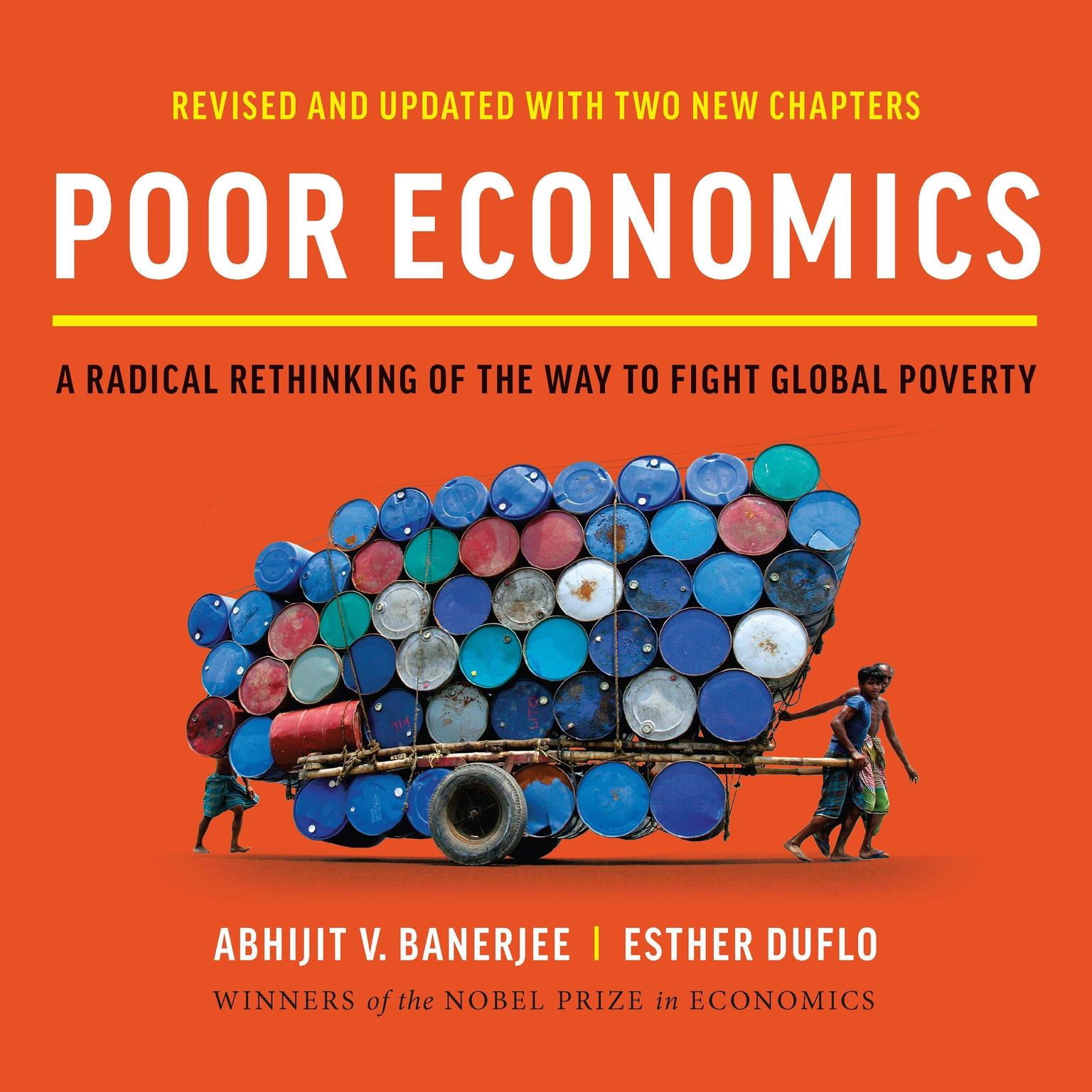
Poor Economics: A Radical Rethinking of the Way to Fight Global Poverty Audiobook
Play Audiobook Sample

 (4.00) - 1,611 listener ratings
Quick Stats About this Audiobook
Total Audiobook Chapters:
Longest Chapter Length:
Shortest Chapter Length:
Average Chapter Length:
Audiobooks by this Author:

Publisher Description
The winners of the Nobel Prize in Economics upend the most common assumptions about how economics works in this gripping and disruptive portrait of how poor people actually live.
Why do the poor borrow to save? Why do they miss out on free life-saving immunizations, but pay for unnecessary drugs? In Poor Economics, Abhijit V. Banerjee and Esther Duflo, two award-winning MIT professors, answer these questions based on years of field research from around the world. Called "marvelous, rewarding" by the Wall Street Journal, the book offers a radical rethinking of the economics of poverty and an intimate view of life on 99 cents a day. Poor Economics shows that creating a world without poverty begins with understanding the daily decisions facing the poor.
Download and start listening now!
"A much needed book on how we can tackle the issue of poverty utilizing studies on what has worked in the past. What makes this book stand out is the 'on the field' analysis that Banerjee and Duflo use. It looks at the effectiveness of programs by considering how people on the ground will utilize them. A powerful read and inspiring for anyone in the field of development economics or nonprofit orgs."
— Omar (5 out of 5 stars)
Poor Economics Listener Reviews

-
" The book brings forth research based ground reality. Amazingly well written and provides deep insight into what is wrong in our understanding of the poor. The book does not merely thrive on analyses and diagnosis alone. It even suggests some "do-able" solutions. A must read for all the policy makers an those that are ineterested in promoting the interests of the poor. "
— Anil, 2/20/2014 -
" A comprehensive overview of current aid trends and best practices. Lacks a prescription because the best advice is that aid policies shouldn't be universal - what works in one situation may not work in another, and thus each example needs specialized and individualized attention. "
— Nora, 2/10/2014 -
" I kept hoping to hear the silver bullet to best attack poverty, whereas the point was that there isn't one. Some strategies help some people in some circumstances and this book looks at the numbers to illustrate that "
— Eric, 2/2/2014 -
" J-PALers who read this, don't judge me! I'm a little ashamed that it's taken me this long to read that my bosses and colleagues put so much work into and is a core piece in what J-PAL does. But, eh! I did finish it! Superb overview of a lot of the work that is going on in development economics and clearly describes a modest and hopeful view of poverty alleviation. "
— Ben, 1/28/2014 -
" This is an incredibly well written account of the struggles and the achievements of developing economics. Highly recommend reading this book, prior to all by Sachs or Easterly. "
— Jeff, 1/14/2014 -
" A wonderful read. Instead of trying to find a universal, one-time solutions or principles/formulas like other lame books, this one delivers valuable lessons about working from the bottom up, with specific cases. Very informative and challenging material, yet it could have been better if the book can expand its examples' scope. "
— Tam, 1/8/2014 -
" Amazing book. It is not poor economics at all. "
— Lambert, 1/1/2014 -
" Very insightful and often counterintuitive. Really important addition to economic literature on developing economies and eminently readable. "
— Jesse, 12/21/2013 -
" Fantastic insight into why the poor makes the decisions they do, and what creates the right incentives and what does not. "
— Kim, 11/23/2013 -
" Really brilliant, though-provoking ideas about the economic problems facing the world's poorest people drawn from rigorous empirical research. The writing is clear and non-technical, if a bit stilted at times. You'll learn a lot. "
— Matthew, 9/5/2013 -
" Slightly data intensive but provides great analysis of various methods of philanthropy and attempts to relieve the cycle of poverty. "
— Jeremy, 7/21/2013 -
" One of my favorite books on understanding incentives affecting the behavior of the poor "
— Joyce, 4/17/2013 -
" This book is a good introduction to randomized control trials and a lot of the research that has been done on poor communities using this methodology. I liked its conclusion, about how we can make a difference at the margin with evidence-based interventions. "
— Chase, 12/13/2012 -
" Authors conducted research on the economics of poverty and discovered some things about the poor that are contrary to "conventional wisdom." I disagree with their solutions, however, which usually involves government intervention in some way. "
— Thomas, 8/3/2012 -
" Very good analysis of the economic reality of 90% of humanity. "
— Jose, 5/17/2012 -
" One of the better books on development Aid. "
— Sanne, 3/20/2012 -
" Enlightening and innovative ways to think about and attack the issue of development world wide "
— Sadee, 2/23/2012 -
" Filled with partially developed ideas and opinions that frequently lack meaningful statistical backing, this book nonetheless has value because it does generate original ideas about longstanding problems. "
— Kurishin, 1/29/2012
About the Authors
Abhijit Banerjee is the Ford Foundation International Professor of Economics at the Massachusetts Institute of Technology, and a co-founder and co-director of the Abdul Latif Jameel Poverty Action Lab (J-PAL).
Brian Holsopple has been in the voice-over and audio business for more than twenty years. His commercial client list includes Discover Channel, Virginia Lottery, and City Bank of Texas, among others. A winner of the 2007 Publisher’s Weekly Audiobook Award, he has narrated books for Arthur C. Clarke, Henry Wiencek, and Jay Rubenstein.
About Elisabeth Rodgers
Elisabeth Rodgers is an actress and AudioFile Earphones Award–winning narrator. After graduating from Princeton University, she completed a two-year program at William Esper Studio, where she studied with Maggie Flanigan. Her audiobook narration training came from Robin Miles, who has also directed her in several productions. She has recorded dozens of books for a multitude of publishers.