


 Play Audiobook Sample
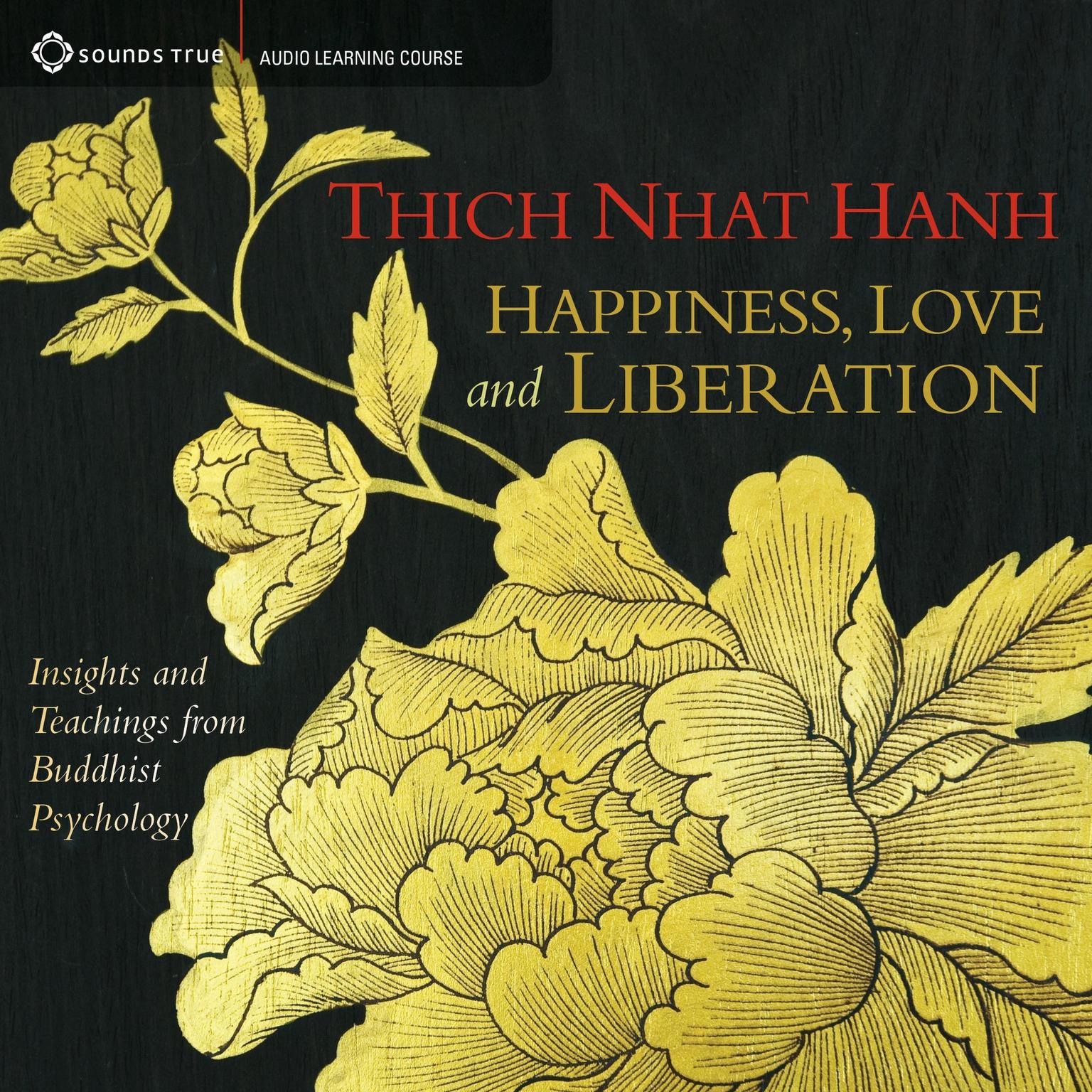
Happiness, Love, and Liberation: Insights and Teachings from Buddhist Psychology Audiobook
Play Audiobook Sample
 (0.00) - 0 listener ratings
Quick Stats About this Audiobook
Total Audiobook Chapters:
Longest Chapter Length:
Shortest Chapter Length:
Average Chapter Length:
Audiobooks by this Author:










Publisher Description
Real-World Training in "The Practice of Happiness" with Thich Nhat Hanh
Look deeply into the nature of the mind and you will find the seeds of true happiness and freedom. This was the Buddha’s great realization—and it is a discovery that you, too, can make in any moment. With Happiness, Love, and Liberation, you will join Thich Nhat Hanh for seven sessions of advanced teachings and rare insights discovered throughout his seven-decade inquiry into the truths of Buddhist psychology.
Understanding the Roots of Suffering—the First Step Toward Freedom
What are the ingredients for a life of genuine happiness? According to Thich Nhat Hanh, happiness only arises through a deep understanding of the roots of suffering—and through the cultivation of joy, love, and compassion that comes with daily practice of mindfulness and meditation. Offering in-depth instruction in applying foundational Buddhist principles backed by modern science, he provides inspiration and support for healing the habits that lead to suffering and opening to the miracle of life in the here and now.
From guidance to sitting and walking meditation to an examination of key Buddhist teachings including the Diamond Sutra, the Heart Sutra, and much more, these seven audio-learning sessions are intended to help us release our worries about past and future—and start living with ease in joyful recognition of the gifts of the present moment.
Highlights
• How mindfulness and concentration generate happiness and joy
• Meditation as an antidote to agitation and anxiety
• Four basic breathing exercises for accessing peace at any time
• Releasing concepts that lead to suffering
• "Every step a miracle"—the art of walking meditation
• Our intimate connection to our "spiritual ancestors"
• The evolution of science and philosophy
• Zen practice: toward a fuller understanding of reality
• Does suffering ever leave us—even in Paradise?
• The factors of enlightenment
• Eternalism, nihilism, and the Middle Way
• The intersection of Buddhism and modern science
• The art of compassionate, deep listening and loving speech
• Why removing the notion of self is central to all Buddhist teachings
• Your body as the cosmos itself
• The difference between manifestation and birth
• How the entire world profits with each person who grows in happiness
Download and start listening now!
Happiness, Love, and Liberation Listener Reviews
Be the first to write a review about this audiobook!
About Thich Nhat Hanh
Thich Nhat Hanh (1926–2022) was a Vietnamese Zen master, poet, scholar, and peace activist who was nominated for the Nobel Peace Prize by Dr. Martin Luther King Jr. He wrote more than 100 books of poetry, fiction, and philosophy, with over a million copies in print. He survived three wars, persecution, and more than thirty years of exile. He was a Buddhist monk and the master of a temple in Vietnam, the lineage of which is traceable across two centuries to the Buddha himself.